bigpotluck.com/how-it-works
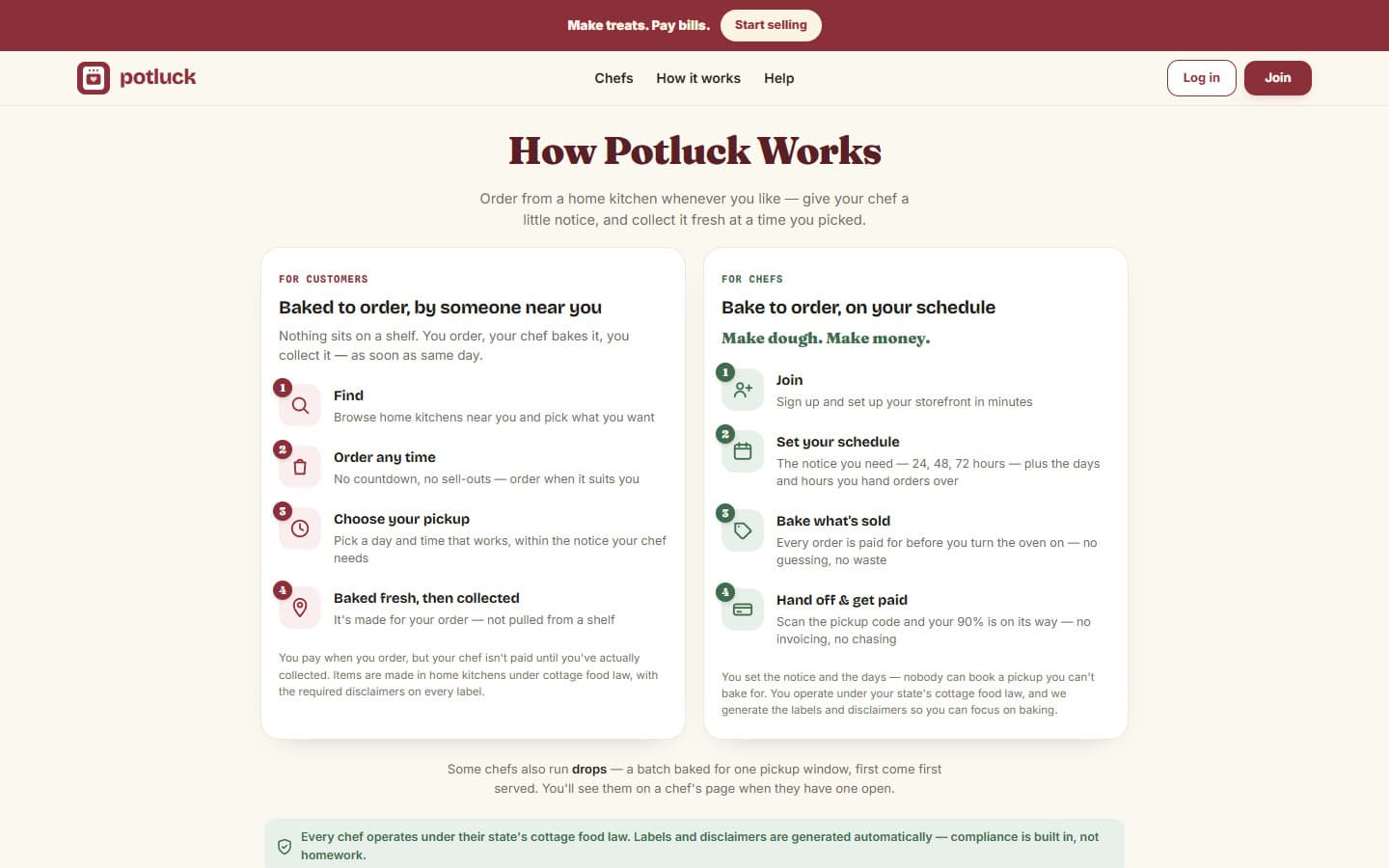
Why it existed
I own the payments stack: checkout, transfers, payouts, webhooks and reconciliation. In a marketplace, every one of those has to be right for both the buyer and the seller.
What I built
- An order is marked paid only after the payment is verified server-side against Stripe, with inventory decremented exactly once.
- Checkout validation that rejects client-supplied prices, items no longer on sale and quantities above stock, covered by a suite of attack tests.
- Alerts for failed and stuck payouts.
- A daily reconciliation of the database against Stripe that classifies every mismatch by cause.
Outcome
Payout Ledger is a from-scratch public rebuild of these ideas. It shares no code with Potluck.
On screen
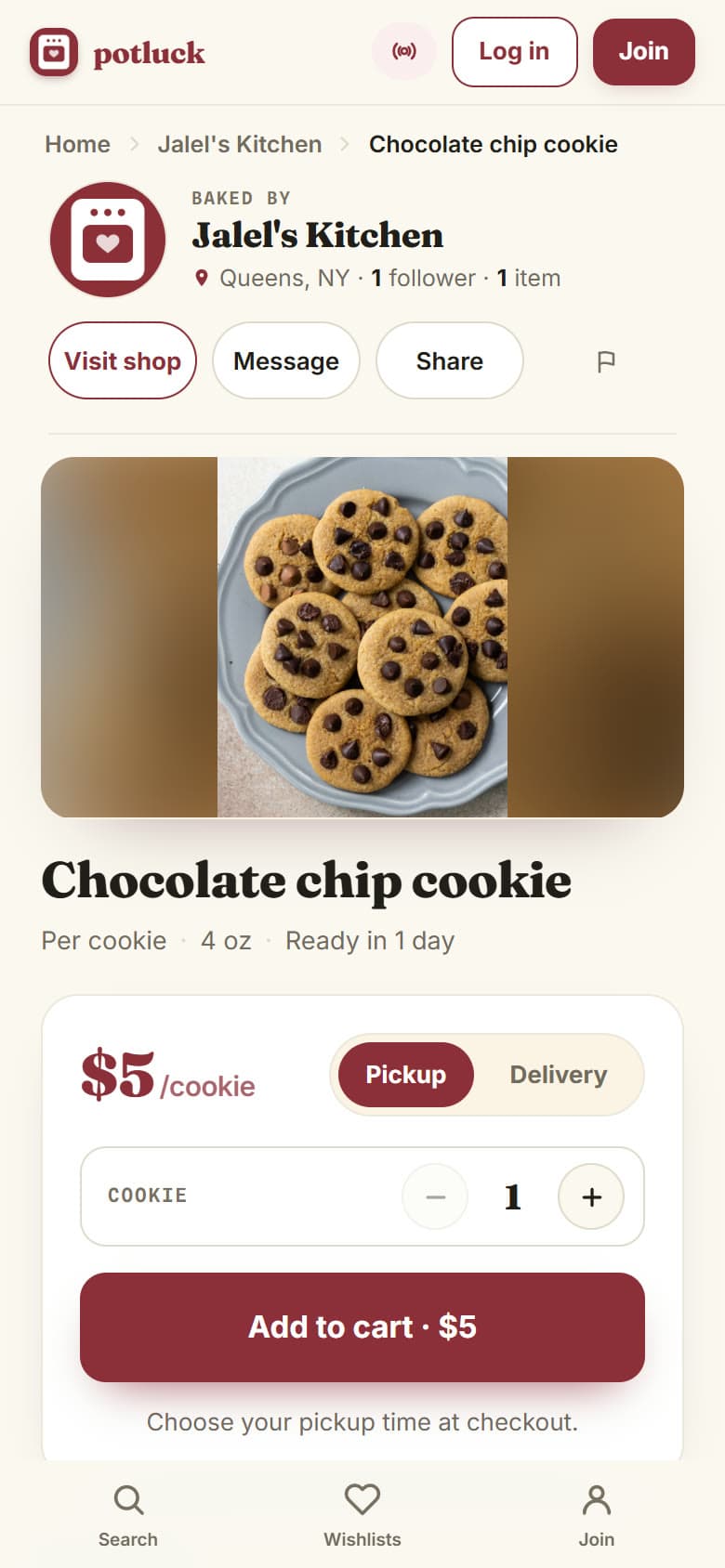
How it fits together
Checkout
Stripe webhooks
Server verification
Order and stock
Reconciliation
Payout alerts